
ChatGPT for Cybersecurity: A Cookbook PDF ─ Article Plan (12/24/2025 15:55:34)
Today’s date is 12/24/2025 15:55:34. This plan details a guide leveraging ChatGPT for cybersecurity‚ including a PDF “cookbook” format‚ addressing recent account breaches and deep research capabilities.
Recent developments allow saving ChatGPT’s Deep Research reports as PDFs‚ enhancing usability for security professionals.
The cybersecurity landscape is rapidly evolving‚ demanding innovative tools like ChatGPT. Recent breaches‚ impacting 100‚000 accounts‚ highlight vulnerabilities‚ while ChatGPT’s deep research offers solutions.
This exploration details ChatGPT’s capabilities and its potential role in bolstering cybersecurity defenses‚ alongside inherent limitations.
The Rising Threat Landscape in Cybersecurity
The digital world faces an increasingly sophisticated and relentless barrage of cyber threats. Traditional security measures are often insufficient against rapidly evolving attack vectors‚ necessitating a proactive and adaptive approach. Recent reports indicate a significant surge in data breaches‚ with a concerning incident involving approximately 100‚000 compromised ChatGPT user accounts appearing on the dark web.
This highlights the vulnerability of even widely adopted AI platforms and the critical need for enhanced security protocols. The threat landscape is characterized by increasingly complex malware‚ sophisticated phishing campaigns‚ and the growing potential for social engineering attacks. Nation-state actors‚ organized crime groups‚ and individual hackers all contribute to this escalating danger.
Furthermore‚ the proliferation of interconnected devices (IoT) expands the attack surface‚ creating more opportunities for malicious actors. Addressing these challenges requires continuous monitoring‚ threat intelligence gathering‚ and the ability to rapidly respond to incidents. The development of tools and techniques to leverage emerging technologies‚ like ChatGPT‚ is becoming paramount in the fight against cybercrime.
What is ChatGPT and its Capabilities?
ChatGPT is a large language model (LLM) chatbot developed by OpenAI‚ renowned for its ability to generate human-quality text. It’s built on the GPT architecture and trained on a massive dataset of text and code‚ enabling it to understand and respond to a wide range of prompts and questions.
Its core capabilities include natural language processing‚ text summarization‚ translation‚ and code generation. Crucially‚ ChatGPT now features “Deep Research” – a multi-step research function allowing complex task completion. This functionality is particularly valuable‚ and recently gained the ability to save reports as PDFs‚ enhancing its practical application.

For cybersecurity‚ ChatGPT can analyze text-based data‚ identify patterns‚ and assist in various tasks. While not a security tool itself‚ its analytical and generative abilities can augment existing security workflows. Understanding these capabilities is vital for effectively integrating ChatGPT into a cybersecurity strategy‚ as outlined in this forthcoming “cookbook.”
Why Use ChatGPT in Cybersecurity? ─ Benefits & Limitations
Leveraging ChatGPT in cybersecurity offers significant benefits‚ primarily through automation and enhanced analysis. It can accelerate threat intelligence gathering‚ assist in vulnerability analysis‚ and even aid in generating initial incident response plans – all detailed within this “cookbook” approach.
The ability to save Deep Research reports as PDFs streamlines documentation and sharing of findings. However‚ critical limitations exist. ChatGPT is prone to generating inaccurate or misleading information‚ requiring careful validation of its outputs. Recent reports highlight a significant breach – 100‚000 ChatGPT accounts compromised – raising data security concerns.
Furthermore‚ ChatGPT is susceptible to prompt injection attacks and potential misuse for social engineering. It should be viewed as a powerful assistant‚ not a replacement for skilled cybersecurity professionals. This guide will address these limitations and provide best practices for responsible and effective use.

Understanding the Cybersecurity Risks of ChatGPT
Recent breaches‚ like the 100‚000 account compromise‚ highlight ChatGPT’s vulnerabilities. Prompt injection‚ misinformation‚ and social engineering risks demand careful consideration within this cybersecurity cookbook.
Data Breaches and ChatGPT Account Security (100‚000 Account Breach)
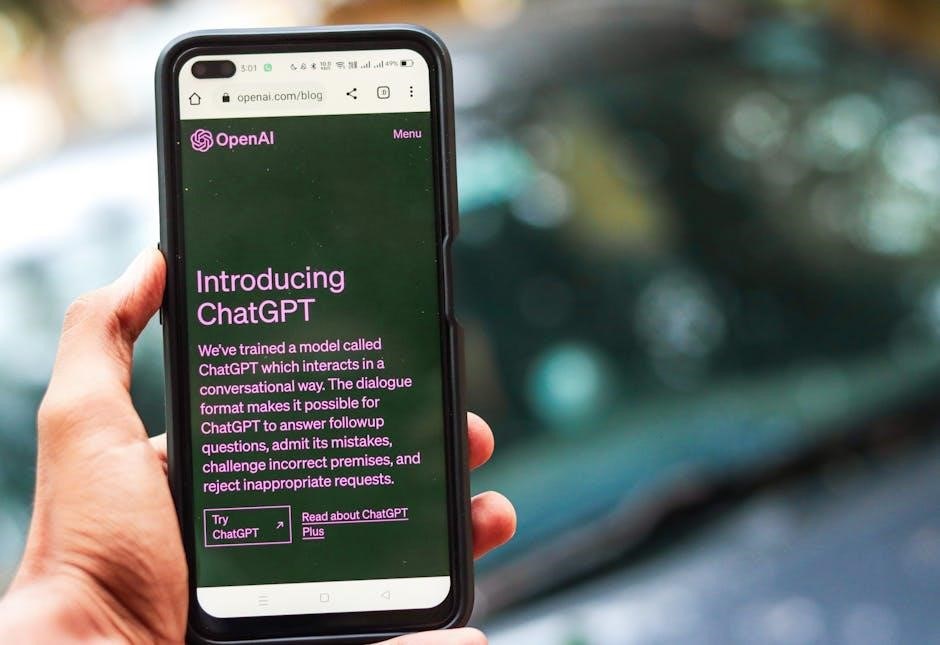
The recent exposure of approximately 100‚000 ChatGPT user accounts on the dark web serves as a stark warning regarding the platform’s security posture. This breach underscores the critical need for robust account security measures‚ a central theme within this cybersecurity cookbook. Compromised credentials can lead to unauthorized access‚ data exfiltration‚ and potential misuse of the AI for malicious purposes.
This cookbook will detail best practices for securing ChatGPT accounts‚ including strong password policies‚ multi-factor authentication (MFA) implementation‚ and vigilant monitoring for suspicious activity. We will explore the implications of this breach‚ analyzing how attackers might leverage compromised accounts and outlining preventative strategies. Furthermore‚ the guide will address the importance of regularly reviewing and updating security settings‚ as well as understanding OpenAI’s security policies and incident response procedures.
Mitigation strategies will be presented‚ focusing on minimizing the impact of potential future breaches and ensuring the confidentiality‚ integrity‚ and availability of sensitive information processed through ChatGPT;
Prompt Injection Attacks & Mitigation
Prompt injection represents a significant vulnerability when utilizing ChatGPT for cybersecurity tasks. This attack vector involves crafting malicious prompts that manipulate the AI’s behavior‚ potentially overriding security protocols or extracting sensitive information. Our cybersecurity cookbook will dedicate substantial coverage to understanding and mitigating these threats.
We will explore various prompt injection techniques‚ demonstrating how attackers can bypass intended safeguards and exploit the AI’s capabilities. The guide will detail robust prompt engineering strategies designed to prevent injection attacks‚ including input validation‚ sanitization techniques‚ and the implementation of guardrails.
Specific examples of malicious prompts and corresponding mitigation strategies will be provided‚ offering practical guidance for security professionals. Furthermore‚ we’ll discuss the importance of continuous monitoring and testing to identify and address emerging prompt injection vulnerabilities. This section will empower users to safely leverage ChatGPT’s power while minimizing the risk of compromise.
Potential for Misinformation and Social Engineering
ChatGPT’s ability to generate human-like text presents a considerable risk regarding misinformation and social engineering attacks. The cybersecurity cookbook will thoroughly address these dangers‚ emphasizing the need for critical evaluation of AI-generated content. Attackers could leverage ChatGPT to create highly convincing phishing emails‚ disinformation campaigns‚ or impersonation attempts.
We will detail techniques for identifying AI-generated misinformation‚ focusing on linguistic patterns and inconsistencies. The guide will provide practical prompts to help ChatGPT detect potentially malicious content and flag suspicious activity. Furthermore‚ we’ll explore methods for verifying information obtained from ChatGPT against trusted sources.
Emphasis will be placed on educating users about the potential for social engineering attacks facilitated by AI. This section will equip security professionals with the knowledge and tools to protect themselves and their organizations from these evolving threats‚ promoting responsible AI usage.
ChatGPT as a Cybersecurity Tool: Core Applications
This section details ChatGPT’s practical uses in cybersecurity‚ including threat intelligence‚ vulnerability analysis‚ and code review assistance‚ forming the core of the cookbook.

Threat Intelligence Gathering with ChatGPT
ChatGPT excels at rapidly compiling and analyzing threat intelligence data. The “cookbook” will feature prompts designed to extract information from diverse sources‚ including security blogs‚ vulnerability databases‚ and dark web forums – acknowledging the recent 100‚000 account breach incident.
Specific prompts will focus on identifying emerging malware campaigns‚ tracking threat actor tactics‚ techniques‚ and procedures (TTPs)‚ and summarizing complex threat reports. Users can request ChatGPT to correlate seemingly disparate pieces of information‚ uncovering hidden connections and potential attack vectors.
Furthermore‚ the cookbook will demonstrate how to leverage ChatGPT’s capabilities for proactive threat hunting‚ generating hypotheses about potential attacks based on current threat landscapes. The ability to save ChatGPT’s Deep Research reports as PDFs will be crucial for documenting and sharing intelligence findings within security teams‚ ensuring a streamlined workflow.
Vulnerability Analysis and Report Generation
ChatGPT can significantly accelerate vulnerability analysis workflows. The “cookbook” will provide prompts to analyze vulnerability reports (like CVEs)‚ explain technical details in plain language‚ and assess potential impact to specific systems – mindful of the recent cybersecurity advisories.
Prompts will guide users in generating comprehensive vulnerability reports‚ including remediation recommendations and prioritization based on risk scores. ChatGPT can also assist in creating tailored reports for different audiences‚ from technical staff to executive management.
Leveraging its deep research capabilities‚ ChatGPT can gather additional context about vulnerabilities‚ such as exploit availability and real-world attack examples. The ability to export these analyses as PDFs ensures clear documentation and facilitates efficient communication. This streamlines the process‚ especially considering potential threats highlighted by the 100‚000 account breach.
Security Code Review Assistance
The “cookbook” will feature prompts designed to assist with security code reviews. Users can input code snippets‚ and ChatGPT will identify potential vulnerabilities like SQL injection‚ cross-site scripting (XSS)‚ and buffer overflows – crucial given the current cybersecurity threat landscape.
Prompts will focus on specific coding languages and security best practices. ChatGPT can explain identified vulnerabilities‚ suggest remediation strategies‚ and even generate corrected code examples. This accelerates the review process and helps developers write more secure code.
The PDF format allows for easy sharing of code review findings with development teams. Furthermore‚ ChatGPT’s ability to perform deep research can help identify relevant security standards and guidelines. This functionality is particularly valuable considering recent data breach concerns and the need for robust security measures.

Building a ChatGPT Cybersecurity “Cookbook”
This section details creating a practical‚ PDF-based guide. It will define the scope‚ focusing on prompt engineering for security tasks‚ and structure content for usability.
Defining the Scope of the Cookbook
The cybersecurity “cookbook” will concentrate on actionable applications of ChatGPT‚ specifically tailored for security professionals and incident responders. It won’t be a comprehensive AI tutorial‚ but rather a focused collection of prompts and workflows. The initial scope will prioritize three core areas: malware analysis‚ phishing email detection‚ and incident response playbook generation – mirroring current threat landscapes.
We will deliberately exclude overly complex or theoretical applications‚ favoring prompts yielding immediately useful results. The cookbook will also address the recent security concerns surrounding ChatGPT‚ including the 100‚000 account breach reported on the dark web‚ by emphasizing secure account practices and prompt sanitization techniques.
Furthermore‚ the scope will include guidance on leveraging ChatGPT’s Deep Research capabilities‚ particularly the newly available PDF export functionality‚ to create detailed and shareable security reports. The ultimate goal is a practical resource that empowers users to enhance their cybersecurity posture using ChatGPT effectively and responsibly.
Essential Prompt Engineering Techniques for Security
Effective prompt engineering is crucial for reliable cybersecurity outputs from ChatGPT. The cookbook will emphasize techniques like specifying the AI’s role (e.g.‚ “Act as a malware analyst”)‚ providing clear context‚ and defining the desired output format. Detailed instructions are key – avoid ambiguity and use precise language when requesting analysis or report generation.
We’ll focus on “few-shot” prompting‚ providing ChatGPT with examples of desired responses to guide its output. Mitigating prompt injection attacks will be a core component‚ teaching users to sanitize inputs and validate ChatGPT’s responses. The cookbook will also demonstrate how to leverage ChatGPT’s Deep Research function effectively‚ structuring prompts for multi-step investigations.
Finally‚ the guide will cover techniques for refining prompts iteratively‚ based on the quality of the generated results‚ and utilizing the PDF export feature to document and share successful prompt workflows.
Structuring the Cookbook for Practical Use
The ChatGPT cybersecurity “cookbook” will adopt a recipe-style format‚ prioritizing ease of use and rapid deployment. Each “recipe” will detail a specific security task – such as malware analysis or phishing detection – and provide a pre-built prompt‚ along with expected outputs and potential variations. Clear categorization is essential; recipes will be grouped by cybersecurity domain (e.g.‚ incident response‚ threat intelligence).
Each recipe will include a difficulty level‚ estimated time to completion‚ and prerequisite knowledge. The PDF format will allow for offline access and easy sharing within security teams. We’ll incorporate a troubleshooting section for common issues‚ and a dedicated area for user contributions and prompt refinement.
Furthermore‚ the cookbook will feature a comprehensive index and search functionality‚ enabling users to quickly locate relevant recipes based on keywords or security challenges.

Specific Use Cases & Prompts (Cookbook Recipes)
This section details practical applications‚ offering pre-defined prompts for tasks like malware analysis‚ phishing email detection‚ and incident response playbook creation using ChatGPT.
Malware Analysis Prompt Examples
Leveraging ChatGPT for initial malware triage requires carefully crafted prompts. For example: “Analyze the following disassembled code snippet [paste code] and identify potential malicious functionalities‚ including command-and-control communication‚ data exfiltration techniques‚ and anti-analysis measures.”
Another effective prompt: “Given this malware sample’s hash [paste hash]‚ research its known characteristics‚ associated threat actors‚ and potential impact based on available threat intelligence reports.”
To refine analysis‚ use: “Explain the purpose of this specific API call [paste API call] within the context of malware behavior‚ and suggest potential mitigation strategies.”
Remember to preface prompts with “You are a cybersecurity analyst” to guide ChatGPT’s response. Always validate ChatGPT’s output with independent analysis and threat intelligence sources‚ as it’s an assistant‚ not a definitive authority.
Further prompts can focus on unpacking obfuscated code or identifying the malware family.
Phishing Email Detection Prompts
ChatGPT excels at identifying phishing indicators within email content. A foundational prompt: “Analyze the following email [paste email text] for phishing characteristics‚ including suspicious links‚ grammatical errors‚ urgent requests‚ and mismatched sender information.”
To assess sender legitimacy: “Based on the ‘From’ address [paste address] and email content‚ investigate the sender’s reputation and verify if it aligns with the claimed organization.”
For link analysis: “Examine the following URL [paste URL] for redirection patterns‚ domain age‚ and potential association with known phishing sites.”
Enhance prompts by specifying context: “You are a security awareness trainer; Explain why this email [paste email] is likely a phishing attempt‚ focusing on red flags for a non-technical user.”
Remember to always independently verify ChatGPT’s findings and educate users on recognizing phishing attempts.
Incident Response Playbook Generation with ChatGPT
ChatGPT can rapidly draft incident response playbooks tailored to specific threats. Begin with a broad prompt: “Generate an incident response playbook for a suspected ransomware attack‚ including containment‚ eradication‚ recovery‚ and post-incident activity phases.”
Refine the playbook by specifying the environment: “Create a playbook for a ransomware incident targeting a small business with limited IT resources.”
For detailed steps: “Outline the specific steps for isolating an infected system during a ransomware attack‚ including network segmentation and data backup procedures.”
To incorporate legal considerations: “Add a section to the playbook addressing data breach notification requirements based on [relevant regulations‚ e.g.‚ GDPR].”
Remember to review and customize ChatGPT’s output with your organization’s specific policies and procedures. Playbooks should be regularly tested and updated.

Advanced Techniques & Deep Research
Leveraging ChatGPT’s deep research capabilities unlocks complex cybersecurity tasks. Saving reports as PDFs streamlines documentation and sharing‚ enhancing the “cookbook’s” practical value.
Utilizing ChatGPT’s Deep Research for Complex Tasks
ChatGPT’s Deep Research feature represents a significant advancement for cybersecurity professionals seeking to automate and enhance intricate investigations. This functionality allows for multi-step research‚ going beyond simple question-and-answer interactions to simulate a more thorough investigative process. Within the context of our cybersecurity “cookbook‚” this translates to tackling challenges like dissecting zero-day exploits or comprehensively mapping out attack surfaces.
Instead of manually querying multiple sources‚ users can instruct ChatGPT to perform a series of related searches‚ synthesize findings‚ and present a consolidated report. For example‚ a prompt could request a deep dive into a newly discovered malware family‚ including its origins‚ propagation methods‚ and potential mitigation strategies. The AI will then autonomously conduct the necessary research‚ citing sources and providing a structured analysis.
This capability is particularly valuable when dealing with rapidly evolving threats where timely information is critical. The “cookbook” will feature specific prompts designed to harness Deep Research for tasks such as threat actor profiling‚ vulnerability trend analysis‚ and the creation of detailed incident reports.
Saving ChatGPT Reports as PDFs – Functionality & Benefits
A recent and crucial development is the ability to save reports generated by ChatGPT’s Deep Research as PDF documents. Previously‚ capturing and archiving detailed analyses required cumbersome copy-pasting or screenshotting methods. This new functionality streamlines the process‚ preserving the report’s formatting‚ links‚ and overall structure for easy distribution and long-term storage.
For the cybersecurity “cookbook‚” this feature is invaluable. It allows users to create shareable‚ professional-looking reports based on ChatGPT-generated insights. These PDFs can be incorporated into incident response documentation‚ vulnerability assessments‚ or threat intelligence briefings. The ability to archive reports in a standardized format also facilitates auditing and compliance efforts.
Furthermore‚ PDFs ensure report integrity and prevent accidental modifications. This is particularly important in the sensitive field of cybersecurity‚ where accurate and reliable documentation is paramount. The “cookbook” will detail how to effectively utilize this PDF export feature to maximize its benefits.
Automating Cybersecurity Tasks with ChatGPT & APIs
Beyond manual prompt interaction‚ ChatGPT’s true power for cybersecurity automation lies in its Application Programming Interface (API). This allows integration with existing security tools and workflows‚ enabling automated tasks like threat intelligence enrichment and initial malware analysis. The “cookbook” will explore practical examples of leveraging the API to build custom security solutions.
Imagine automatically submitting suspicious URLs to ChatGPT for analysis‚ receiving a risk assessment‚ and then updating a threat feed – all without human intervention. Or‚ triggering a ChatGPT-powered vulnerability scan based on new CVE alerts. These scenarios become feasible with API integration.
The cookbook will provide code snippets and guidance on authenticating with the API‚ structuring requests‚ and parsing responses. It will also address considerations like rate limits and error handling. Ultimately‚ automating repetitive tasks frees up security professionals to focus on more complex and strategic initiatives.

Ethical Considerations and Responsible Use
Responsible implementation is crucial. This section addresses data privacy‚ compliance‚ and avoiding bias in ChatGPT’s security assessments‚ emphasizing its role as an assistant.
Data Privacy and Compliance
Navigating the legal landscape is paramount when integrating ChatGPT into cybersecurity workflows. The recent breach of approximately 100‚000 ChatGPT user accounts‚ surfacing on the dark web‚ underscores the critical need for robust data protection measures. Utilizing ChatGPT requires careful consideration of data privacy regulations like GDPR‚ CCPA‚ and others‚ depending on the jurisdiction and data handled.
When feeding sensitive security data – such as network logs‚ vulnerability reports‚ or malware samples – into ChatGPT‚ anonymization and pseudonymization techniques are essential. Avoid directly inputting Personally Identifiable Information (PII) or confidential business data.
Furthermore‚ understand the data usage policies of OpenAI‚ the creator of ChatGPT. Clarify how your inputs are stored‚ processed‚ and potentially used for model training. Compliance also extends to ensuring that ChatGPT-generated reports and analyses do not inadvertently disclose sensitive information. Regularly review and update security protocols to align with evolving data privacy standards and ChatGPT’s capabilities.
Avoiding Bias in ChatGPT-Generated Security Assessments
ChatGPT‚ while powerful‚ is susceptible to biases present in its training data. This can manifest in skewed security assessments‚ potentially overlooking vulnerabilities or misprioritizing threats. A critical aspect of the “cookbook” is outlining techniques to mitigate these biases.
Prompt engineering plays a vital role. Carefully crafted prompts should explicitly request unbiased analysis and diverse perspectives. For example‚ instead of asking “Is this code vulnerable?”‚ ask “Identify potential vulnerabilities in this code‚ considering various attack vectors and coding standards.”
Always validate ChatGPT’s outputs with independent security expertise and tools. Don’t rely solely on the AI’s assessment. Cross-reference findings with established vulnerability databases and conduct manual code reviews.
The “cookbook” should emphasize the importance of critical thinking and human oversight‚ recognizing ChatGPT as an assistant‚ not an infallible authority. Regularly audit ChatGPT’s responses for potential biases and refine prompts accordingly.
The Human Element: ChatGPT as an Assistant‚ Not a Replacement
The core philosophy of this “cookbook” centers on augmenting‚ not replacing‚ human cybersecurity professionals. ChatGPT is a powerful tool‚ but lacks the nuanced understanding‚ critical thinking‚ and contextual awareness of experienced analysts.
The PDF guide will repeatedly stress that ChatGPT’s outputs require thorough validation and interpretation. Automated analysis should inform‚ not dictate‚ security decisions. Human expertise is crucial for identifying false positives‚ understanding the business impact of vulnerabilities‚ and crafting effective remediation strategies.
Furthermore‚ ChatGPT cannot replicate the ethical considerations and judgment calls inherent in cybersecurity. Incident response‚ threat hunting‚ and vulnerability disclosure require human oversight.
This “cookbook” aims to empower security teams to leverage ChatGPT’s capabilities efficiently‚ freeing them from repetitive tasks and allowing them to focus on higher-level strategic initiatives. It’s about synergy‚ not substitution.